Locked Down and Logged In: What End-to-End Encryption Actually Does for You
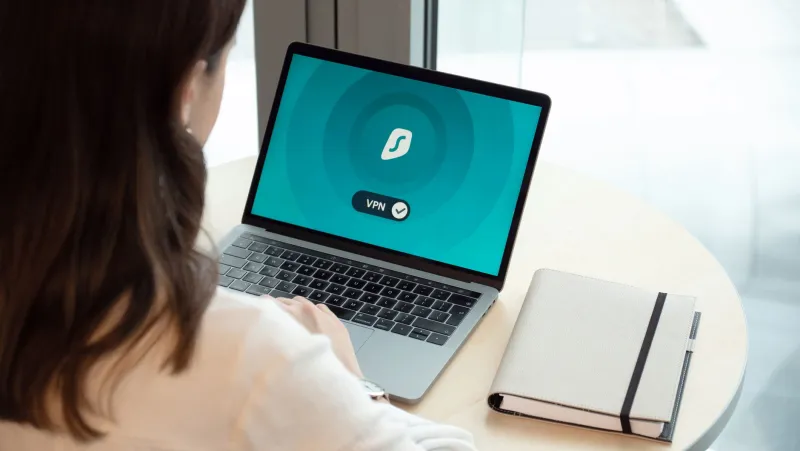
Let's be honest — when most people hear "end-to-end encryption," their eyes glaze over. It sounds like something buried in a software manual, not something that affects your daily texts, work chats, or video calls. But here's the thing: if you've sent a message today — whether it was a quick note to a coworker or a sensitive document to your accountant — encryption (or the lack of it) was already part of that story.
With data breaches making headlines at an almost exhausting pace, and Congress increasingly eyeing how tech companies handle user data, understanding encryption has gone from a nerdy bonus to a genuine life skill. So let's break it all the way down.
So, What Even Is End-to-End Encryption?
Think of a regular message like a postcard. Anyone who handles it — the mail carrier, a nosy neighbor, even the postal service itself — can technically read it. A standard, unencrypted message works the same way. When you hit send, that message often passes through servers, networks, and third-party infrastructure where it could, in theory, be intercepted or read.
End-to-end encryption (E2EE) flips that model entirely. Instead of a postcard, imagine you're sending a locked safe. Only the person on the other end has the key to open it. Not the platform hosting your conversation, not the internet service provider routing your data, not a hacker sitting on the same coffee shop Wi-Fi — nobody. Just you and the intended recipient.
The "end-to-end" part means the message is encrypted on your device before it ever leaves, and it stays encrypted until it arrives and is decrypted on the other person's device. In between, it's essentially scrambled nonsense to anyone who intercepts it.
Why This Is a Bigger Deal in 2024 Than It Was Five Years Ago
American consumers are dealing with a privacy landscape that's shifted dramatically. In the past couple of years alone, major breaches have exposed hundreds of millions of records — from healthcare providers to financial institutions to social platforms. The FTC has ramped up enforcement actions. States like California, Virginia, and Colorado have passed sweeping data privacy laws. And there's growing bipartisan chatter in Washington about federal regulation of how companies store and transmit personal data.
Meanwhile, remote work has made digital communication the primary way people conduct business. Sensitive conversations that used to happen behind closed office doors now happen over chat apps — sometimes apps that weren't built with security as a priority.
The result? More messages, more exposure, and more to lose.
The Difference Between "Encrypted" and "End-to-End Encrypted"
Here's where it gets a little tricky, and where a lot of platforms quietly mislead users. Many messaging services advertise "encryption" without specifying what kind. Standard encryption might protect your data while it's moving across the internet (called "encryption in transit"), but the platform itself can still read your messages on its servers. That's called server-side encryption, and it means the company holding your data has access to it — which also means law enforcement can subpoena it, or a breach can expose it.
True end-to-end encryption means the platform itself cannot read your messages. Zero access. The keys live with the users, not the company.
When evaluating any messaging tool — especially one you're using for work — that distinction is everything.
What to Actually Look for in a Secure Messaging Platform
Not all secure platforms are created equal, and marketing language can be slippery. Here's a practical checklist when you're shopping around:
1. Confirm it's true E2EE — not just "encrypted." Look for documentation that specifies end-to-end encryption for messages, files, and calls. If the company can hand over message content to third parties, it's not true E2EE.
2. Check for open-source or independently audited protocols. Platforms that have had their encryption independently verified by security researchers offer an extra layer of trust. It's not a dealbreaker if they haven't, but it's a major green flag when they have.
3. Look at the metadata policy. Even if message content is encrypted, some platforms still collect metadata — who you talked to, when, how often. That data can paint a detailed picture of your life even without the actual content of your messages.
4. Evaluate key management. Who holds the encryption keys? If it's the platform, that's a risk. If it's you (or your organization), that's control.
5. Consider real-time performance. Security shouldn't mean slow. A well-built platform delivers encrypted communication in real time without lag — because what's the point of a secure message if it takes forever to arrive?
The Real-World Stakes
This isn't abstract. Consider a small business owner sharing financial projections with a partner. A healthcare worker discussing patient information with a colleague. A journalist communicating with a source. A family dealing with a legal matter. In each of these cases, an unencrypted or weakly encrypted channel isn't just inconvenient — it's a liability.
And it's not just about bad actors. Regulatory compliance in industries like healthcare (HIPAA) and finance means that using non-compliant communication tools can expose organizations to serious penalties, regardless of whether a breach ever occurs.
Security That Doesn't Get in the Way
One of the biggest myths about encrypted communication is that it's clunky or complicated. The best platforms today are designed so that the security layer is completely invisible to the user. You just... talk. The encryption happens automatically, behind the scenes, without you having to think about it.
That's the standard worth holding every messaging tool to: security that's airtight and a user experience that doesn't make you feel like you're navigating a spy thriller.
In 2024, settling for anything less isn't just a tech choice — it's a personal and professional risk. The good news is, the tools to protect your conversations are better than they've ever been. You just have to know what to look for.